
Choosing indoor blinds in Melbourne is easier when you start with how you live, not just a colour chart. A sunny bedroom has different needs from a street-facing lounge, a steamy bathroom or a living area with wide sliding doors. That is why the right blind should suit the room’s light, privacy, cleaning and access needs.
This guide compares the main styles and fabrics so you can narrow the options before requesting advice. When comparing blinds in Melbourne, focus on the result you need; not simply the lowest starting price. A blind that looks lovely in a sample can feel wrong if it leaves screen glare at your desk or blocks the doorway when raised. So, stay hooked till the end of this guide to find the right indoor blind styles for your Melbourne rooms.
What should you consider before choosing indoor blinds?
Before comparing styles, decide what matters most: sunlight, privacy, darkness, cleaning, and how often the window is used. Check the window recess, handles, nearby furniture and door swing too; these can affect fitting and everyday operation. Remember, there is no single “best” blind for every home. Treat each opening individually, even if you want a consistent colour throughout the house.
Explore different types of indoor blinds in Melbourne
Compare the main styles below, and confirm fabric, dimensions, mounting and operating options for your windows.
Roller blinds
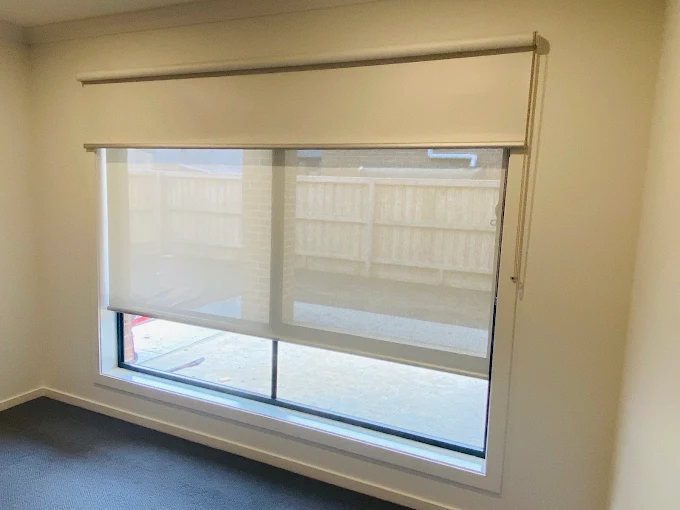
Roller blinds use one fabric panel that rolls up at the top. The fabric determines how much daylight, glare, and visibility remain. When comparing roller blinds in Melbourne, choose between sunscreen, light-filtering and blockout before settling on colour.
Blockout blinds
Blockout blinds limit light passing through the lowered fabric, making them worth considering for bedrooms and media rooms. Fit and edge gaps still matter, so “blockout” does not always mean a completely dark room.
Double roller blinds
A double roller system combines two fabrics, often light-filtering or sunscreen plus blockout, on one window. It gives you options for softer daylight by day and greater privacy or darkness later.
Roman blinds
Roman blinds fold into horizontal pleats as they rise, bringing texture to bedrooms and living rooms. If you are researching Roman blinds in Melbourne, ask how much fabric stacks above the window when raised.
Venetian blinds
Venetian blinds use tilting horizontal slats to adjust light and visibility. They need regular dusting. So, check material suitability before ordering.
Vertical blinds
Vertical blinds have vanes that draw to the side and can suit some wide windows or sliding doors. Check the stack position and clear doorway space when open.
Panel glides
Panel glides use wide fabric panels on a track, suiting some large windows and sliding doors. Check the space needed for panels to stack so daily access stays easy.
Indoor blinds at a glance: which style suits which need?
|
Blind style |
Worth considering for |
Main thing to check |
|
Roller |
Everyday rooms and simple window lines |
Fabric type and side light gaps |
|
Blockout |
Bedrooms and media rooms |
Fit and edge gaps, not fabric alone |
|
Rooms needing day-to-night flexibility |
Space for two layers and ease of use |
|
|
Roman |
Rooms where soft folds and texture matter |
Fabric care and folded stack height |
|
Venetian |
Adjustable light direction and visibility |
Dusting and moisture suitability |
|
Vertical |
Some wide windows and sliding doors |
Vane stack and door clearance |
|
Panel glide |
Large glazed openings and sliding doors |
Track space and panel stacking |
Which indoor blinds are suitable for each room?
Bedrooms
Choose blockout rollers when limiting light is the priority. Double rollers add a lighter daytime layer, while blockout Roman blinds offer a softer finish. Also, ask about fit and edge gaps as well as fabric.
Living rooms and dining areas
Light-filtering rollers soften daylight, double rollers add flexibility, and Roman blinds introduce texture. For street-facing windows, check privacy by day and evening because indoor lighting changes what people outside can see.
Kitchens and bathrooms
Choose material to suit moisture, ventilation and cleaning needs. Steam, condensation and cooking residue can damage unsuitable fabrics or finishes, so ask the indoor blinds in Melbourne supplier what suits the actual conditions.
Home offices
Choose a fabric that reduces screen glare while retaining your preferred daylight and view. Sunscreen fabric does not guarantee privacy after dark, so consider outside sightlines and when lights are on.
Large windows and sliding doors
For wide openings, check dimensions, mounting points, handle clearance, door access, and stacking space. Vertical blinds, panel glides or multiple rollers may suit different layouts.
Choosing between light-filtering, blockout and sunscreen fabrics
- Light-filtering fabrics soften daylight, but privacy depends on fabric openness and the difference between indoor and outdoor light.
- Blockout fabrics limit light passing through the material, though gaps around the blind can still admit light.
- Sunscreen fabrics reduce glare while retaining some outward visibility; privacy varies by fabric and time of day.
- A living room may need daylight and a view, while a bedroom may need darkness. Double rollers can cover both needs but add a second layer.
So, compare fabric samples in the room where they will be used. Remember that sunscreen fabrics generally offer a different privacy result after dark, when indoor lights are on, and the room may be brighter than outside.
A quick indoor blinds buying checklist
- Light: Decide whether the room needs filtered daylight, reduced glare, or a darker setting.
- Privacy: Check views from nearby homes and the street during both daylight and evening lighting.
- Moisture: Confirm that the material suits the room’s steam, condensation and cleaning needs.
- Fit: Measure the window and check handles, recess depth, door access and edge gaps.
- Operation: Consider who will use the blind and whether the window is high or awkward to reach.
- Safety: Ask about cord-free options and ensure any corded covering is supplied and installed to the applicable Australian requirements.
How indoor blinds can support comfort and protect furnishings
Blinds help manage glare and direct sunlight, and suitable window coverings may support comfort when used with the home’s glazing and other shading. Results depend on orientation, glass, fabric, fit and use; an internal blind alone will not solve every hot or draughty room.
Reducing direct sunlight may limit exposure that contributes to fading, but no blind prevents all fading. Also, you must follow care advice for furnishings and the blind itself.
Child safety and blind operating options
For homes with children, consider operating cords carefully. Cordless or motorised options may be worth asking about, but safety still depends on the product and installation. Check existing cords for loose loops and keep cots or furniture out of reach when getting in touch with indoor blinds in Melbourne suppliers.
Also, for current Australian guidance on cord hazards, product warnings and installation, check out the ACCC’s blinds, curtains and window fittings safety guide.
Are motorised indoor blinds worth considering?
Motorised blinds may suit hard-to-reach windows or households that value easy operation. So, ask about controls, power, compatibility and maintenance for your selected system.
Frequently asked questions about indoor blinds
1. What are the best indoor blinds for bedrooms?
Blockout rollers help limit incoming light. Double rollers add daytime flexibility, while blockout Roman blinds offer a softer finish. Fit and edge gaps affect the final darkness.
2. What is the difference between roller blinds and Roman blinds?
Roller blinds wind fabric around a tube; Roman blinds fold into pleats. Rollers look streamlined, while Romans add texture.
3. How long do indoor blinds last?
Lifespan depends on material, sunlight, use, cleaning, and installation. Drowell lists a five-year warranty; check the terms for your product.
4. How should I clean indoor blinds?
Follow the product’s care instructions. Some blinds suit light dusting or careful vacuuming; others may allow a damp cloth. Do not soak a blind or use strong cleaners unless advised.
5. Which indoor blind fabrics are suitable for kitchens and bathrooms?
Choose for moisture, condensation, ventilation and cleaning needs. Confirm that the material suits your actual room conditions.
6. Are cordless or motorised blinds a good choice for homes with children?
They can reduce reliance on exposed cords, but product choice and installation still matter. Corded internal coverings must meet applicable Australian safety requirements.
Find the right indoor blinds across Melbourne and nearby suburbs
You do not need to choose every room at once. Start with the windows causing the biggest problem: light, privacy, glare, or access, and then compare suitable styles. Also, when comparing indoor roller blinds in Dandenong or in Pakenham, compare fabric, fit, privacy, and installation; not price alone.
Google searches for “cheap roller blinds Dandenong” or “cheap roller blinds Pakenham” are a reminder to compare like-for-like quotes, including fabric, operation, installation and warranty.
Also, for bathroom roller blinds in Kew, Pakenham or Dandenong, and other suburbs, you must check moisture suitability and ventilation and for that, you may check out Drowell’s Bathroom Roller Blinds Kew and nearby suburbs guide. The Venetian blinds Melbourne guide may also help you compare Venetian blinds in Pakenham and other areas.
Drowell Blinds is based in Dandenong South and has 20+ years of experience in the blinds business. So, do not forget to contact Drowell Blinds to discuss your priorities and arrange a measure and quote for indoor blinds in Melbourne because they offer a 5-year warranty on their products.