Venetians Blinds Melbourne:The Complete 2026 Guide for Victorian Homes
Quick Answer-Venetians Blinds Melbourne homes rely on most are timber and faux-wood styles in 50mm slats — warm, light-controllable, and built for the city’s extreme temperature swings. Paired with outdoor roller blinds for alfresco areas and blockout rollers for bedrooms, they form a complete window furnishing system for modern and heritage homes alike. Read on for suburb-specific advice, material comparisons, and answers to every question Melbourne homeowners ask before buying.
Are Venetian Blinds Still Fashionable in 2026?
The short answer: emphatically yes. After years of roller blinds dominating the Melbourne market, Venetians Blinds Melbourne designers and homeowners are reaching for are experiencing a genuine resurgence — and not because of nostalgia. The reason is architectural.
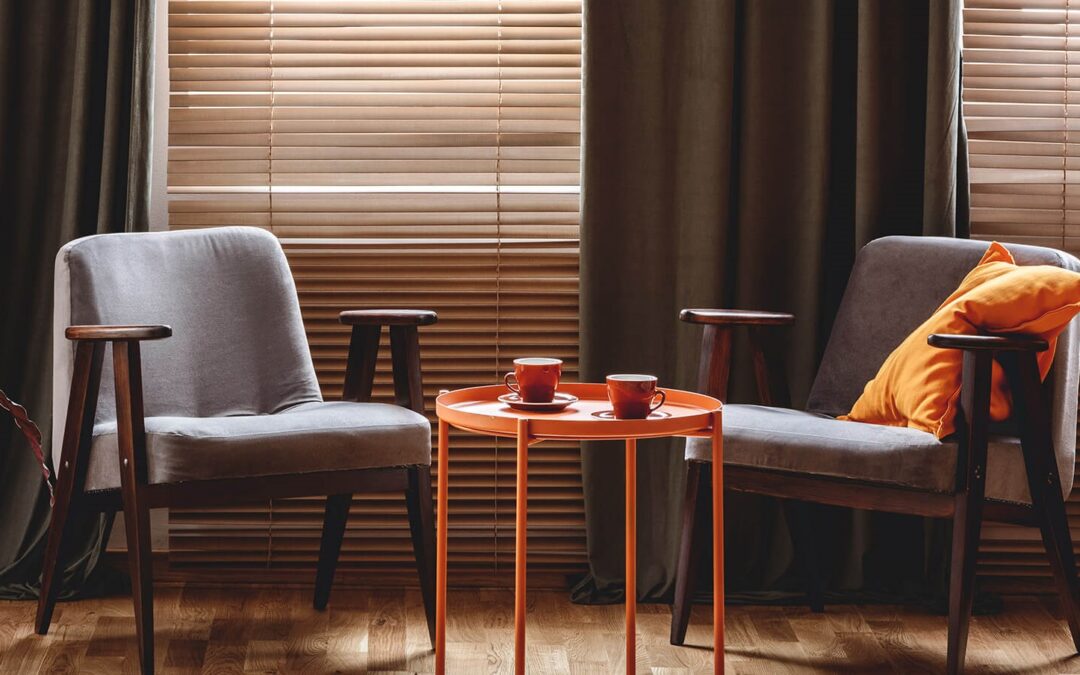
Melbourne’s new residential construction boom — particularly in growth corridors like Craigieburn, Point Cook, and the outer south-east — produces homes with large, wide windows and open-plan living zones where horizontal blinds deliver a clean, uninterrupted sightline that softer furnishings struggle to match. Meanwhile, the inner-city renovation market in Kew, Hawthorn, and Fitzroy is leaning into the Japandi aesthetic — a Japanese-Scandinavian hybrid defined by natural materials, restrained palettes, and functional beauty. Timber Venetian blinds fit that aesthetic precisely.
The 2026 shift is specifically toward wider 50mm slats over the older 25mm standard. Wider slats provide a more contemporary look, offer a clearer view when open, and are easier to clean — addressing the one traditional criticism of Venetian blinds head-on.
Natural Timber Grain
Real and Visionwood composite finishes that bring organic warmth to modern Melbourne interiors.
Wide 50mm Slats
The contemporary standard — cleaner sight lines, easier maintenance, bolder visual presence.
Motorised Operation
Smart-home integration for tilt and lift — now available across Venetian blind ranges.
Heritage Compatibility
Timber Venetians complement Victorian and Edwardian architecture without visual conflict.
Timber vs Faux Wood vs Aluminium: Which Venetian Blind Material Suits Melbourne?
Material choice is the single most important decision when selecting Venetians Blinds Melbourne conditions demand. Melbourne’s climate is notoriously variable — the Bureau of Meteorology records temperature ranges of 30°C or more within a single 24-hour period in some seasons, with coastal humidity on the bay-side suburbs and dry heat pushing north into Craigieburn and Pakenham. Here is how each material responds:
| Material | Best Rooms | Moisture Resistance | Aesthetic | Maintenance |
|---|---|---|---|---|
| Timber (Basswood / Paulownia) | Living rooms, bedrooms, studies | Low — avoid bathrooms, laundries | Warmest, most natural grain | Dust with dry cloth; avoid steam |
| Visionwood (Composite) | All rooms incl. high-humidity | High — moisture and warp resistant | Timber-look, premium finish | Wipe clean with damp cloth |
| 50mm Faux Wood (PVC Composite) | Kitchens, bathrooms, alfresco | Very high — fully washable | Clean, modern timber appearance | Lowest maintenance of all |
| Aluminium (Slimline) | Commercial, offices, garages | Excellent — rust-resistant alloys | Crisp, contemporary, minimal | Easy wipe; slats can dent |
Visionwood Venetian blinds deserve special mention. This engineered composite is purpose-built for climates exactly like Melbourne’s. It delivers a finish that is genuinely difficult to distinguish from real timber at normal viewing distances, holds its shape through temperature cycling, and is fully washable. For Melbourne families, Visionwood is often the most practical choice without visual compromise.
Slimline Venetian blinds in aluminium — featuring 25mm or 35mm narrow slats — remain the standard for commercial applications and home offices where light control precision matters more than warmth. Their slim profile sits neatly inside a shallow window recess where a 50mm slat would be impractical.
Outdoor Roller Blinds Melbourne: Why They’re Non-Negotiable for Alfresco Spaces
Melbourne’s alfresco culture is real — but so are its afternoon westerlies, summer UV index readings that regularly exceed 11 (Extreme), and October downpours that arrive with zero warning. Outdoor Blinds Melbourne homeowners invest in are less a luxury than a practical necessity for anyone who wants to genuinely use their deck, pergola, or balcony across all four seasons.
Outdoor roller blinds are the dominant solution in Melbourne’s market for good reason. They retract fully when not needed, deploy in seconds, and — when specified in the right fabric — block UV radiation while maintaining outward visibility through a screen weave. This is critical for households where the view or garden matters as much as the shade.
Outdoor Roller Blinds Dandenong and South-East Suburbs
The south-east growth corridor — Dandenong, Springvale, Keysborough, Pakenham — sees a high proportion of new townhouses and single-storey homes with north-facing alfresco areas that bear the full force of summer sun. Outdoor Roller Blinds Dandenong installations specified in a 5% openness factor fabric block 95% of UV while keeping the outdoor room visually connected to the garden. For maximum shade with full privacy, a blockout or 1% openness fabric drops solar heat transfer even further.
Wind resistance is worth factoring in. Quality outdoor roller blind systems use heavy-duty bottom rails and optional side channel tracking to prevent fabric flutter and maintain the blind’s position in gusty conditions — essential given the south-east’s exposure to Melbourne’s notorious southerly changes.
Outdoor Roller Blinds Kew and Inner-East Installations
In established inner-east suburbs like Kew, Camberwell, and Balwyn, the challenge is different. Older homes with established tree canopies and rear-facing terraces often require custom-size Outdoor Roller Blinds Kew to accommodate non-standard pergola dimensions and heritage-overlay architectural constraints. Premium cassette housing is particularly valued here for its clean appearance against period-style eaves and timber pergolas.
Inner-east homeowners also tend to specify neutral or heritage-adjacent colours — stone, parchment, or deep charcoal — that complement the earthy brick and painted timber palette of Edwardian and California bungalow architecture.
Awnings: The Fixed Shade Alternative
Where outdoor roller blinds offer flexibility, awnings deliver permanent overhead protection. Folding-arm awnings extend over decks without requiring posts or structure, while fixed metal or fabric awnings suit windows and north-facing facades where year-round shading is the priority. Energy modelling by the Your Home technical manual — the Australian Government’s design guide for sustainable homes — confirms that external shading on north-facing windows is one of the highest-impact passive cooling strategies for Australian homes, reducing summer solar gain by up to 90% compared to internal-only blinds.
Indoor Blinds Melbourne: Matching Every Room to the Right Solution
The most common mistake Melbourne homeowners make is treating Indoor Blinds Melbourne as a single category decision. Each room has a distinct functional requirement — and matching the right blind type to the right room makes the difference between a furnishing that performs and one that frustrates.
Bedroom
Blockout roller blinds or blockout Roman blinds. Melbourne’s long summer evenings (daylight past 8:30pm) make true blackout performance essential for quality sleep. Double roller systems — sheer layer plus blockout layer — give daytime privacy with optional full blackout at night.
Kitchen
Faux-wood or Visionwood Venetian blinds, or a compact roller blind in a moisture-resistant fabric. Easy-clean surfaces are essential. Avoid fabric Roman blinds near cooking zones where grease and steam cause premature deterioration.
Bathroom
50mm faux wood Venetian blinds or moisture-rated PVC roller blinds. Real timber warps in sustained humidity. Aluminium Venetians are also reliable. Privacy is the primary function — aim for a top-down or inside-mount fit with minimal light gaps.
Living Room
Timber Venetian blinds, Roman blinds, or full-length curtains depending on the aesthetic. Panel glides work exceptionally well across large sliding door openings common in open-plan Melbourne builds.
Home Office
Slimline aluminium Venetian blinds or light-filtering roller blinds. Screen glare is the primary enemy of productivity — a louvred Venetian that allows precise tilt adjustment eliminates screen reflection without killing natural light entirely.
Feature Windows
Custom Venetian blinds up to 2400mm wide for architectural windows and bi-fold openings. Custom sizing is not a premium — it is the standard approach for any window that falls outside nominal dimensions.
Roller Blinds Melbourne: The Versatile Foundation
Roller Blinds Melbourne homeowners install more than any other single blind type — and the reason is versatility. A single-face roller blind in a light-filtering fabric handles the daytime privacy and glare-reduction needs of most rooms in a single, clean pull. Upgrade to a double roller blind system and you add a blockout layer behind a sheer — giving you three light states from one window with zero hardware clutter.
The 2026 roller blind market in Melbourne is firmly in the territory of textured and woven fabrics. Linen-look, grasscloth-texture, and soft boucle weave roller blind fabrics have largely displaced the flat, smooth synthetic fabrics of the early 2010s — adding depth and warmth to interiors.
Blinds Point Cook and Western Growth Suburbs
Blinds Point Cook demand reflects the suburb’s demographic — predominantly young families in newly built four-bedroom homes with large western-facing living areas. Western exposure is Melbourne’s most challenging — afternoon summer sun creates intense solar heat gain that standard light-filtering fabrics cannot adequately manage. Homeowners in Point Cook, Werribee, and Hoppers Crossing are increasingly specifying solar-rated blockout rollers for west-facing rooms, combined with sheer linen rollers on northern elevations.
Blinds Craigieburn and Northern Corridor Homes
Blinds Craigieburn requirements skew toward energy efficiency and temperature management. Craigieburn’s location at the northern edge of Melbourne’s urban fringe means genuinely hot summers and colder winters than inner-suburban areas. Insulating blinds — particularly cellular/honeycomb designs and lined Roman blinds — deliver measurable year-round benefit, keeping rooms cooler in January and noticeably warmer through July. Timber Venetian blinds also contribute when closed, providing a dead air layer at the glass that reduces heat transfer.
What Blinds Are Best for Victorian-Era Melbourne Homes?
This is the question Melbourne homeowners in Kew, Fitzroy, Thornbury, and Brunswick ask more than almost any other — and the answer requires balancing heritage sensitivity with contemporary function.
Victorian-era homes (roughly 1840–1900) and Edwardian homes (1901–1920) share architectural characteristics that directly affect blind selection: high ceilings with tall, narrow sash or casement windows, decorative plaster cornices, painted timber architraves, and often south-facing living rooms with limited direct sunlight. Venetians Blinds Melbourne heritage homeowners specify most successfully are typically:
- 50mm timber Venetian blinds in white, off-white, or cedar stain — sits inside the window recess without competing with the architrave, allows generous light when tilted open, and scales well to tall window proportions.
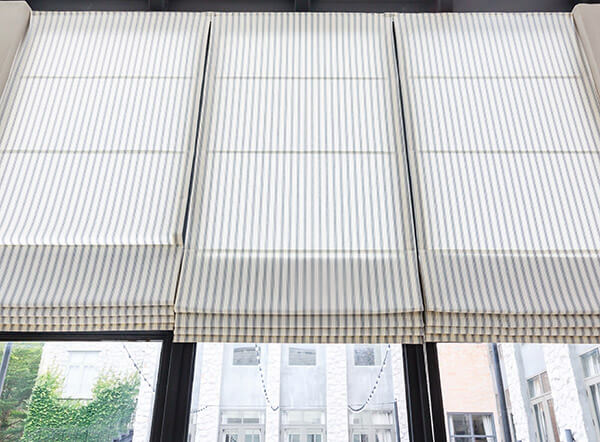
- Linen or cotton Roman blinds — brings textural warmth to formal rooms. A flat Roman blind style is the most heritage-sympathetic option.
- Full-length curtains with block-lining — the most period-accurate choice for formal reception rooms. Linen, Belgian flax, or velvet in neutral or deep heritage tones complement the scale of Victorian interiors.
- Plantation shutters — architecturally appropriate for period homes and add genuine resale appeal to inner-ring Melbourne properties.
The one category to approach cautiously in heritage homes is vertical blinds on narrow windows. Vertical blinds work best on wide window spans and sliding glass doors — their proportions suit the wide horizontal openings of contemporary architecture better than the tall, narrow apertures of heritage buildings.
What Is the Downside of Venetian Blinds? (Honest Answers)
Any window furnishing professional who tells you Venetian blinds are perfect for every application is selling, not advising. Here is an honest summary of where Venetian blinds underperform — and what to do about it:
| ⚠️ Honest Limitations Dust accumulation between slats The horizontal surface of each slat collects dust more readily than a roller blind or curtain. Solution: wider 50mm slats have fewer surfaces to clean than 25mm slats, and microfibre blind-cleaning tools simplify the task significantly. Imperfect blackout performance Venetian blinds in the closed position reduce light dramatically but do not achieve true blackout — light passes through slat gaps and around the edges. For bedrooms requiring full darkness, pair with a blockout blind as the primary solution. Real timber in humid spaces Genuine basswood Venetian blinds will bow, warp, or cup in sustained bathroom or laundry humidity. Visionwood or 50mm faux-wood composite is the correct specification for these rooms. Cord and chain safety requirements Australian ACCC safety requirements mandate that all blind cords and chains meet child-safety specifications including breakaway connectors and cleats. Motorised or cordless operation eliminates this concern entirely. |
Custom Venetian Blinds 2400mm Wide: Measuring and Fitting for Melbourne’s Larger Windows
Melbourne’s contemporary residential construction — particularly in master-planned estates across Point Cook, Pakenham, Craigieburn, and Clyde North — favours large window spans, bi-fold stacker doors, and open corner glazing systems that render off-the-shelf blind sizes irrelevant. Venetian blinds 2400mm wide and beyond are not a special-order anomaly — they are the standard requirement for these homes.
How to Measure Correctly
Decide: inside mount or outside mount. Inside mount sits within the recess — cleaner look, requires exact width minus 6–8mm for clearance. Outside mount overlaps the frame — covers light gaps, requires width plus 50mm overlap per side.
Measure width in three places: top, middle, and bottom of the window recess. Use the narrowest measurement for inside mount.
Measure drop: from the top of the recess to the sill or desired blind base. Measure left, centre, and right.
Check for square: if measurements vary by more than 10mm, the opening is not square — a professional measure visit is strongly recommended before ordering.
Note recess depth: timber Venetian blinds require a minimum 55–65mm bracket depth. Slimline aluminium blinds can fit in a 40mm recess. Confirm recess depth before specifying.
Venetian Blinds Pakenham: Custom Sizing for South-East New Builds
Venetian Blinds Pakenham and the broader south-east growth corridor present a specific installation challenge: display home window specifications are often not replicated consistently in individual builds, meaning no two houses in the same estate necessarily share the same window dimensions. Custom-measuring each window individually — rather than relying on builder-specified standard sizes — is the only reliable approach to achieving a fitted result that looks intentional rather than approximate.
Smart Blinds and Motorisation: What Melbourne Homeowners Need to Know in 2026
Motorised window furnishings have crossed from luxury feature to mainstream expectation faster than almost any other smart-home technology. In 2026, the question Melbourne homeowners ask is no longer “can my blinds be motorised?” — it is “which motorisation system integrates with my existing setup?”
Battery-operated motors: the most flexible and retrofit-friendly option. No electrician required. Battery life on quality motors averages 12–24 months with typical residential use. Suitable for any blind type including timber Venetians, roller blinds, and Roman blinds.
Hardwired 240V motors: preferred for new builds or major renovations where concealed cabling can be run. Eliminates battery management entirely and is the most reliable long-term solution.
Smart home integration: leading motor brands support Google Home, Amazon Alexa, Apple HomeKit, and custom home automation protocols. Automated schedules — open at sunrise, tilt for afternoon privacy, close at sunset — are set once and forgotten.
Child safety: motorised or cordless operation satisfies ACCC child-safety requirements for blind cords without needing additional safety devices. For households with young children, motorisation is often the most elegant solution to compliance.
Motorisation is available across all roller blind, Roman blind, and vertical blind systems available through Drowell Blinds — ask the team about retro-fit and new-install options for your Melbourne home.
Beyond Venetians: Shutters, Curtains, and Panel Glides for Melbourne Homes
A complete window furnishing solution for a Melbourne home is rarely a single product decision. Most well-designed interiors layer different treatments across different rooms — and understanding where each product excels helps homeowners avoid expensive retrofits later.
Plantation Shutters
Plantation shutters are the highest-value window furnishing in terms of resale impact for inner-Melbourne properties. They are a permanent architectural feature — they do not date like fabric, require almost no maintenance beyond occasional wiping, and suit both heritage and contemporary homes when specified correctly. The louvre tilt function provides the same precise light control as Venetian blinds, but in a fixed, permanently fitted form.
Curtains
Curtains are experiencing a genuine design revival in 2026 Melbourne interiors. After years of minimalist roller-blind-only schemes, interior designers are returning full-length drapery to living rooms and bedrooms — often layered over roller or venetian blinds for a combined functional and decorative effect. Floor-to-ceiling curtains in linen, velvet, or woven textiles add acoustic softness, thermal mass, and the kind of tactile luxury that no hard window furnishing can replicate.
Panel Glides
Panel glide blinds are the contemporary answer to large sliding door and stacker door openings that are a standard feature of Melbourne’s open-plan new builds. Wide fabric panels track horizontally across the window — providing a clean, architectural alternative to vertical blinds or curtains. They are particularly effective in open-plan living and dining zones where visual consistency across a long wall of glazing is the design priority.
Frequently Asked Questions About Venetians Blinds Melbourne
Are Venetian blinds still fashionable in 2026?
Absolutely. Timber and faux-wood Venetian blinds in 50mm slats are among the top window furnishing choices in Melbourne interior design for 2026. Their clean horizontal lines, natural material options, and light-control precision align perfectly with the Japandi and contemporary organic aesthetic dominating Melbourne interiors.
What is the downside of Venetian blinds?
The main limitations are dust collection between slats (manageable with wider 50mm formats), imperfect blackout performance when closed, and the unsuitability of real timber for high-humidity rooms. Visionwood and faux-wood composites address the humidity issue, and pairing with a blockout roller resolves the blackout limitation.
What blinds are best for Victorian-era Melbourne homes?
Timber Venetian blinds in white or heritage stain, flat Roman blinds in linen or cotton, full-length lined curtains, and plantation shutters are all architecturally appropriate choices. The key is selecting a treatment that respects the scale of the window — narrow sash windows suit inside-mount Venetians or Roman blinds better than wider or layered systems.
What is the newest trend in blinds for 2026?
The top 2026 trends in Melbourne are: natural-texture roller blinds (linen and woven fabrics), motorised and smart-home integrated systems, double roller setups combining sheer and blockout layers, wide 50mm timber Venetians, and outdoor roller blinds that extend alfresco living areas through all seasons. Curtains are also returning — layered over roller or Venetian blinds for combined function and warmth.
What is the difference between Visionwood and real timber Venetian blinds?
Real timber Venetian blinds (typically basswood or paulownia) have a natural grain and warmth that is unmatched aesthetically, but are sensitive to humidity and temperature cycling. Visionwood is a premium engineered composite that replicates the timber-grain appearance while being fully moisture-resistant and dimensionally stable — ideal for Melbourne’s variable climate and high-humidity rooms.
Are outdoor roller blinds worth it for Melbourne weather?
They are one of the highest-value outdoor additions for Melbourne homes. Melbourne’s high UV index, unpredictable wind changes, and four-season weather variability make outdoor roller blinds a functional necessity for anyone who wants to use their alfresco area year-round. Quality UV-blocking screen fabrics can block 95–99% of UV radiation while maintaining outward visibility.
Do child-safe blinds comply with Australian standards?
Yes — mandatory ACCC safety requirements for blinds and curtain cords require breakaway connectors, cord cleats, or cordless/motorised operation to eliminate cord entanglement risk for children. All Drowell Blinds products are supplied compliant with Australian safety requirements. Motorised blinds are the most complete child-safe solution.
Can Venetian blinds be made 2400mm wide?
Yes — custom Venetian blinds can be manufactured to 2400mm wide and beyond for architectural windows, bi-fold openings, and feature window spans. Custom sizing is standard practice, not a premium add-on, for Melbourne’s contemporary residential builds where large glazing spans are the norm.
How do I clean Venetian blinds efficiently?
For routine maintenance, close the slats fully and wipe with a dry microfibre cloth or specialised multi-slat cleaning tool. For faux-wood and Visionwood Venetians, a lightly damp cloth removes more stubborn grime. Avoid steam or excessive moisture on real timber Venetians. Annual deep-cleaning keeps blinds looking new for many years.
What warranty can I expect on quality blinds in Melbourne?
Drowell Blinds backs its window furnishing products and installations with a 5 Years Warranty — a genuine measure of product and service confidence. When evaluating any blind supplier in Melbourne, warranty terms are among the most important indicators of product quality and company longevity.
Blinds and Energy Efficiency: What Melbourne Homeowners Should Know
Window furnishings are among the highest-impact passive energy management tools available in Melbourne homes — and their contribution is often dramatically underestimated. The Australian Government’s Your Home design guide notes that unshaded west and north-facing windows are among the primary drivers of summer overheating in Australian residential buildings.
From an energy perspective, the general hierarchy of blind performance in Melbourne conditions is:
External outdoor roller blinds and awnings — highest summer benefit; intercepts solar radiation before it enters the glass.
Cellular (honeycomb) blinds — best internal insulation; the air-trapping cell structure reduces both summer heat gain and winter heat loss.
Lined curtains — effective insulation when floor-to-ceiling and close-fitted to the wall; acoustic benefits also.
Blockout roller blinds — good light and moderate thermal control when closed.
Timber and Visionwood Venetian blinds — the closed slat position creates a dead-air buffer at the glass; best combined with curtains for full thermal benefit.
The most energy-aware Melbourne homeowners layer solutions — outdoor roller blinds on west-facing alfresco areas, blockout rollers in bedrooms, and timber Venetians in living areas — creating a system that actively manages thermal comfort year-round rather than relying exclusively on heating and cooling.